CAAS Licensed UA Operator: UOP/0974

GreenerAir

Periodic Facade Inspection (PFI) Singapore: Stop “Repair Bill Shock”

Professional TR-78 Compliant Drone Inspection (PFI) & Independent Technical Governance.

Received a BCA PFI Notice — or planning ahead for a building that is ageing past 20 years? GreenerAir helps MCSTs, building management teams complete Periodic Facade Inspection with clear data, PE-ready reporting and cost control from first scan through Certificate of Compliance (COC).

COMPLETE PFI GOVERNANCE: DIRECT INSPECTION & TECHNICAL AUDIT

greenerair trust elements

Request a GreenerAir Periodic Facade Inspection (PFI) Quote

Preliminary assessment in 2 working days.
What is Periodic Facade Inspection (PFI)?

In Singapore, the BCA (Building and Construction Authority) mandates PFI to ensure that aging building exteriors remain structurally sound and safe for the public.
Legal Requirement: Mandatory for buildings above 13m in height once they reach 20 years of age.
Inspection Cycle: Must be conducted once every 7 years to detect early signs of deterioration.
Safety Focus: Identifies risks like loose tiles, spalling concrete, or corroded brackets to prevent falling debris.
Qualified Professionals: Must be performed by a Competent Person (CP) Professional Engineer or Architect.
Compliance: Ensures building owners meet the Building Control Act standards and avoid penalties.

Building Facades and Exterior Features Age Under Singapore’s Tropical Climate

Building facades and exterior features age under Singapore’s tropical climate—UV, rain, thermal cycling and occupancy all stress tiles, cladding, sealants, windows, balconies and fixings. Periodic Facade Inspection (PFI) exists so owners detect deterioration early and protect the public from falling exterior features.
In plain terms, PFI is not a cosmetic paint survey. It is a structured safety inspection of the building envelope under BCA’s periodic inspection framework, documented so defects can be classified, prioritized and rectified under professional oversight.

Key facts owners and MCSTs should know

Regime in force since January 2022 under BCA’s building facade inspection framework.
Typical trigger profile: buildings over 20 years old, with height commonly referenced at 13 m and above (confirm against your BCA notice and current BCA criteria).
Recurring cycle: inspection every seven years in the standard pathway after the initial notice-driven inspection. Owner duty: Look for PFI service providers like GreenerAir and appoint a Competent Person (CP) to conduct the PFI and ensure defects found are repaired promptly
Safety focus: loose tiles, spalling concrete, corroded brackets, failed sealants, unstable attachments and other exterior-feature risks.

*Always treat your individual BCA PFI Notice and the latest BCA guidance as controlling.*

Who must comply under BCA rules?

If your building falls within BCA’s PFI criteria, compliance is not optional once you are on the notice pathway. In practice, the owners and building management corporations most often engaging support are:

  • MCSTs of condominiums and strata developments past the age/height thresholds
  • Commercial and mixed-use asset managers
  • Industrial and institutional building owners
  • Facilities teams preparing budgets ahead of an expected notice window

How often is PFI required?

Under the standard BCA pathway, facade inspection is not a one-off. After the initial inspection cycle linked to the notice regime, buildings are generally expected to be re-inspected every seven years.

Notice response: When BCA issues a PFI Notice, the building owner or MCST should look for BCA approved Drone Service Provider (DSP), appoint a Competent Person within the timeline stated through DSP, grant safe access for facade inspection, and act on defects the CP identifies. Early planning reduces resident disruption, avoids rushed contractor pricing, and lowers the risk of late submission. If drawings are missing, as-built facade plans can usually be obtained through BCA’s plan purchase process so the inspection team can plan access and coverage properly.

What happens when you receive a BCA PFI Notice?

  • Read the notice deadlines.
  • Look for BCA approved DSP (Drone Service Providers)
  • Appoint a Competent Person through DSP.
  • Gather drawings and access info.
  • Agree inspection methodology (including accredited DSP for high-rise buildings /BCA approved DSP for low-rise building notification if used).
  • Inspect and document.
  • Review findings with the CP/PE and submit PFI report to BCA.
  • Rectify evidence.
  • Close the loop via prescribed BCA/CORENET channels through your CP.

Roles: Competent Person (CP) vs Facade Inspector (FI)

CP/FI: In BCA’s PFI regime, the Competent Person (CP) is the qualified professional responsible for the facade inspection—typically a Professional Engineer or registered architect who meets BCA’s criteria. The CP may appoint a Facade Inspector (FI) to assist with visual and close-range work, but the FI operates under the CP’s direct supervision and control. The CP remains accountable for methodology, tools, checklists, risk plans and the professional quality of the inspection outputs. Building owners appoint the CP; they do not “self-certify” facade safety.

Stage 1:

100% Drone + 10% Close-Range Inspection

100% Drone Scan:

High-resolution coverage using mandatory 45MP+ sensors (TR-78 Compliant)

Watch: PFI Drone in action at
HDB Singapore.
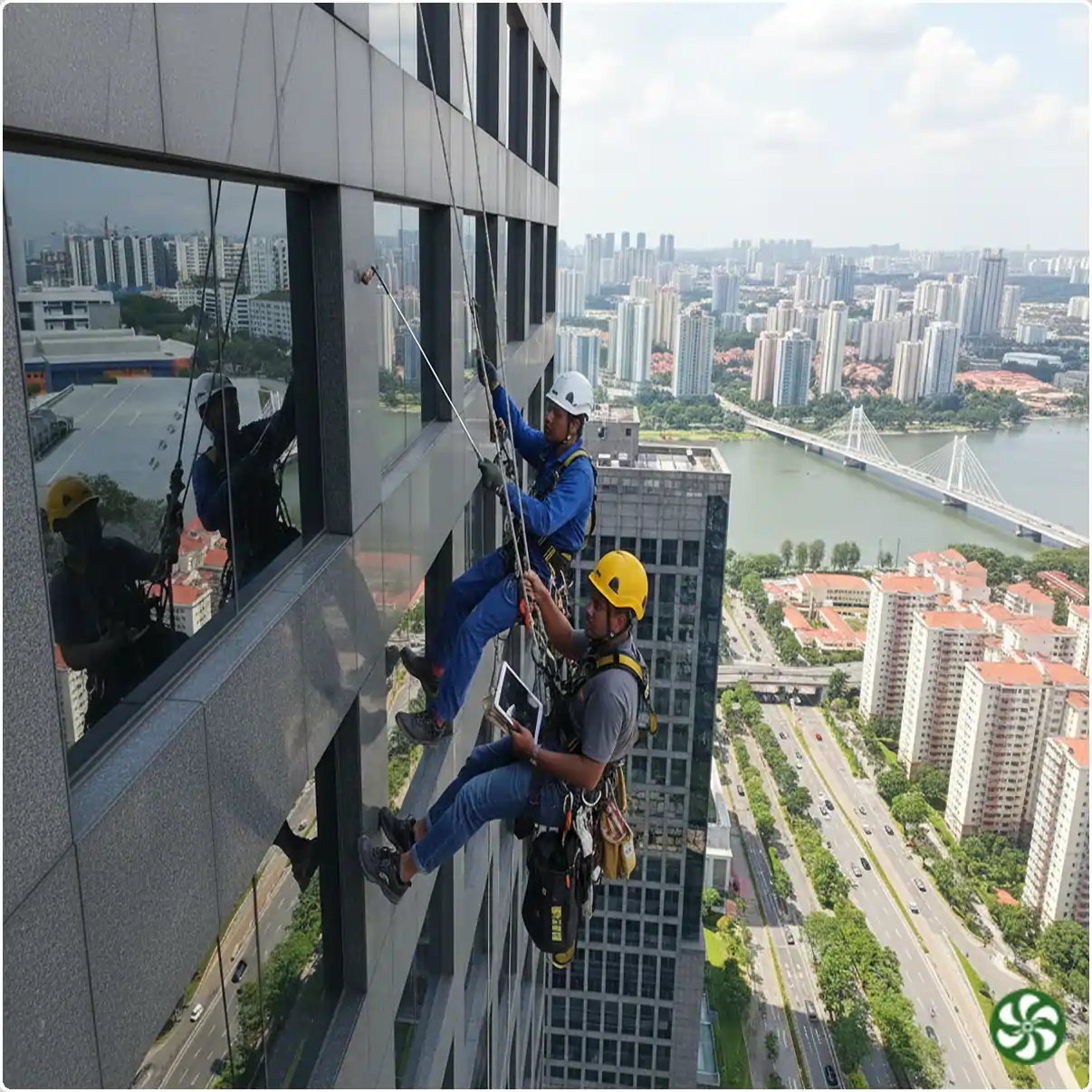
facade-inspection-by-close-range-rope-access

Targeted Inspection:

AI data laser-guides inspectors directly to defects, eliminating wasted search time and slashing equipment rental costs.

10% Human Close Range Inspection:

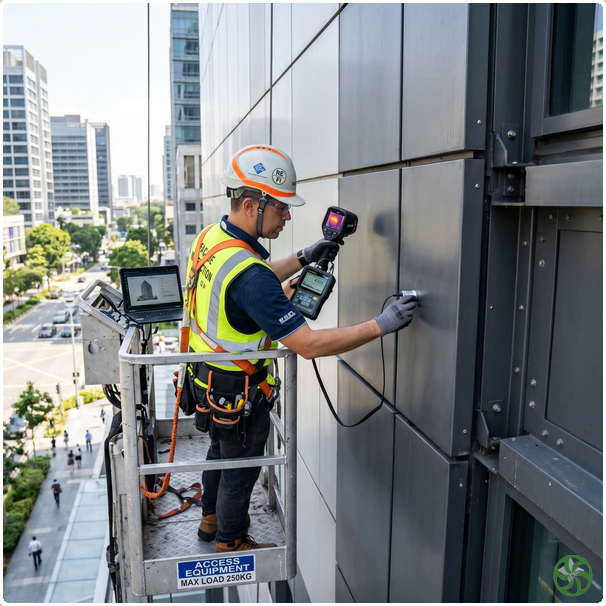
We coordinate mandatory physical checks (Spider-man Rope Access or Boom Lifts) where drones cannot reach.

Targeted Verification: AI data guides the boom lift directly to defects,

Submission: Data is processed via SAC-Accredited AI software for seamless PE endorsement.

Stage 2: Stop Contractor Overcharging
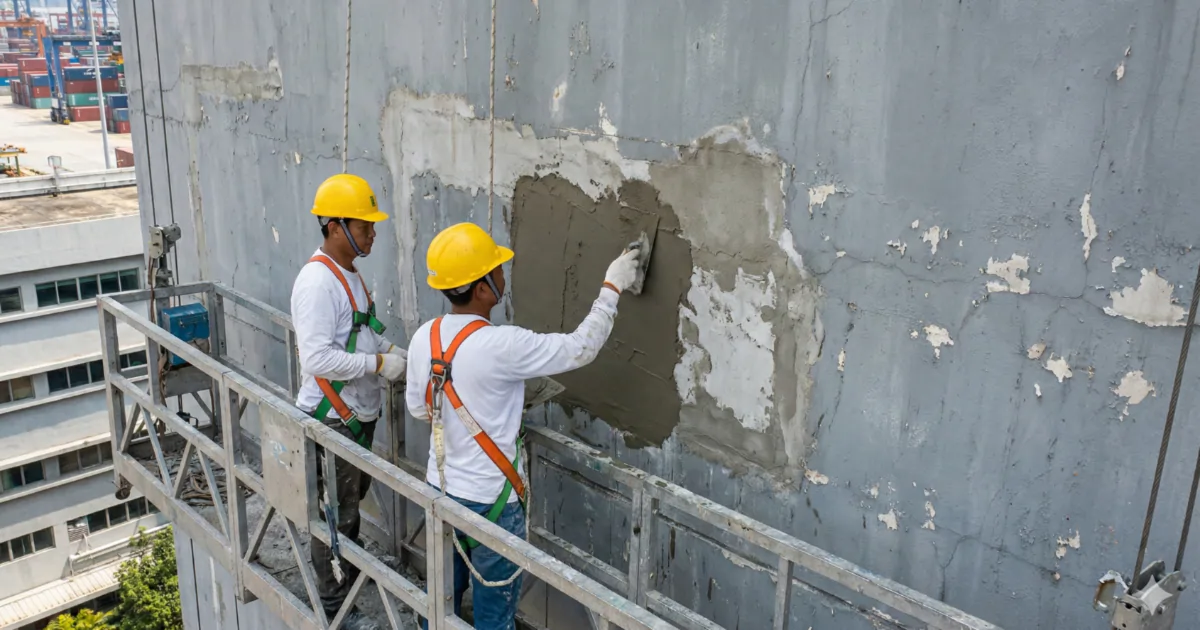
Workers repairing a building facade.

Quantified Defect BOQ: We convert Phase 1 findings into a measurable Bill of Quantities (BOQ). No more “lump sum” markups—you only pay for the repairs actually needed.

Certificate of Supervision (COS): We provide the independent onsite technical oversight required for the PE to legally endorse the repair works.

On-Demand Technical Verification
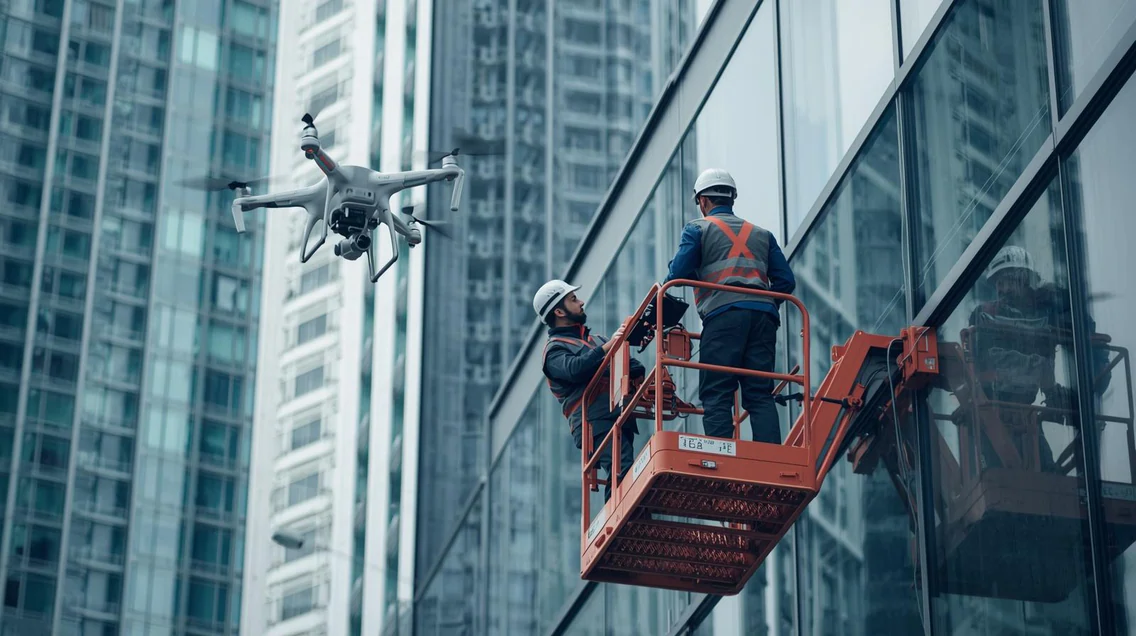
We-are-100-independent-auditors-on-site-We-do-auditing-by-drone-scan-and-close-range-facade-inspection-by-boom-lift, Gondola for complete offer

Drone Verification Scan:

Targeted “Before vs. After” digital proof for the PE’s supervision logs. Includes AP1 Permits.

Close-Range Physical Verification:

Manual audit of workmanship via Gondola or Boom Lift.

Stage 3: Verification to Certification of Completion (COC)

Final Evidence Dossier:

We coordinate all technical evidence and “Proof of Rectification” into a structured dossier.

COC Sign-off:

We ensure every repair is documented and verified so the PE can legally issue the Certificate of Compliance (COC) without technical delays.

Facade repair works is documented and verified completion

Visual survey methods (including accredited drones)

Drones: BCA’s Commissioner of Building Control has approved DSP for low-rise buildings, accredited DSP for high-rise buildings visual facade inspection. CPs must notify CBC with DSP details in the prescribed PFI e-form, ensure CP or supervised FI presence during operations, and personally review all DSP outputs. Verify BCA approved DSP or accredited DSP via Singapore Accreditation Council (search “building facade inspection”). Drones complement close-range checks; they do not automatically replace them.

GreenerAir: BCA Approved DSP / CAAS UOP/0974 · UAPL Class A industrial UAS capability · in-house flying, not hobbyist brokerage.

Notice response: When BCA issues a PFI Notice, the building owner or MCST should look for BCA approved Drone Service Provider (DSP), appoint a Competent Person within the timeline stated through DSP, grant safe access for BCA periodic facade inspection, and act on defects the CP identifies. Early planning reduces resident disruption, avoids rushed contractor pricing, and lowers the risk of late submission. If drawings are missing, as-built facade plans can usually be obtained through BCA’s plan purchase process so the inspection team can plan access and coverage properly.

What your BCA periodic facade inspectionPFI report package should include:

  • Coverage map and methodology
  • Geolocated/elevation-referenced defect imagery
  • Defect schedule for PE review
  • BOQ inputs (when scoped)
  • Safety escalation log if needed
  • Rectification evidence for COC

Timeline and preparation

Prepare: notice, drawings, MCST approvals calendar, Method of Statement, Risk Assessment, Permit to Work, resident notices, access contacts, CP/PE, Registered FI details. GreenerAir preliminary assessment 2 working days after basic building info.
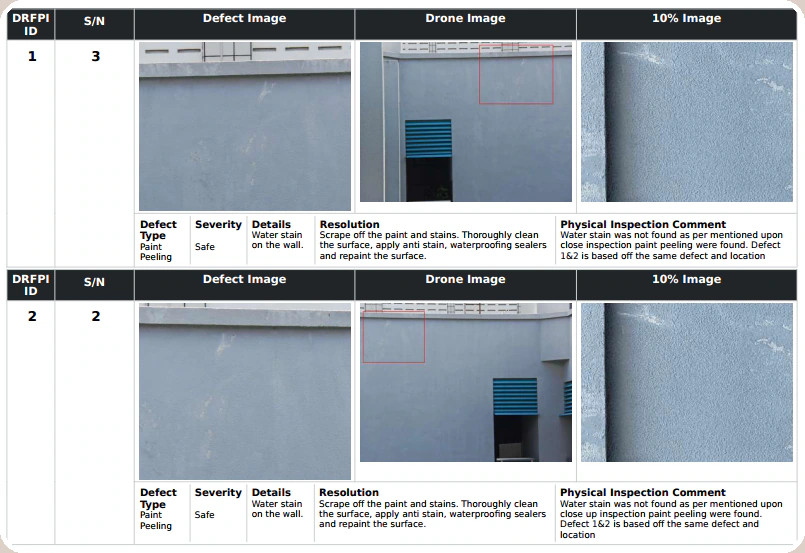
PFI Singapore cost

PFI Cost Varies by height, area, access mix, sampling, occupancy constraints, reporting and supervision. Entry drone-scan packaging from $600; full programmes quoted after assessment.

PFI vs PSI

PFI Notice = facade /exterior features, every 7 years. PSI = structural regime. Related, not interchangeable. every 5 years.

Why Greener Air?

Independent. Technical. ESG-Focused.

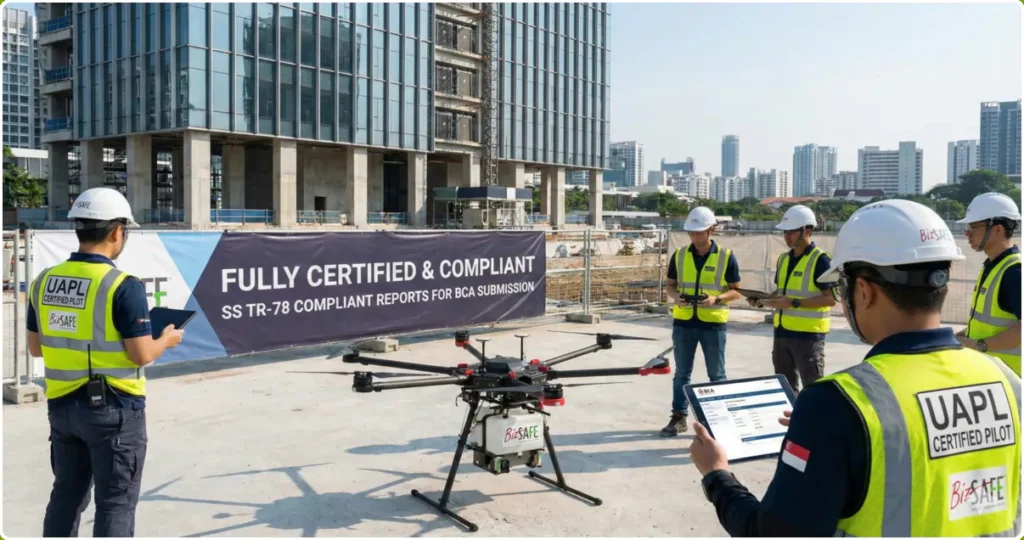
Fully compliant Drone operation at construction site.

BCA Approved DSP

regulatory-document

Proprietary Filter:

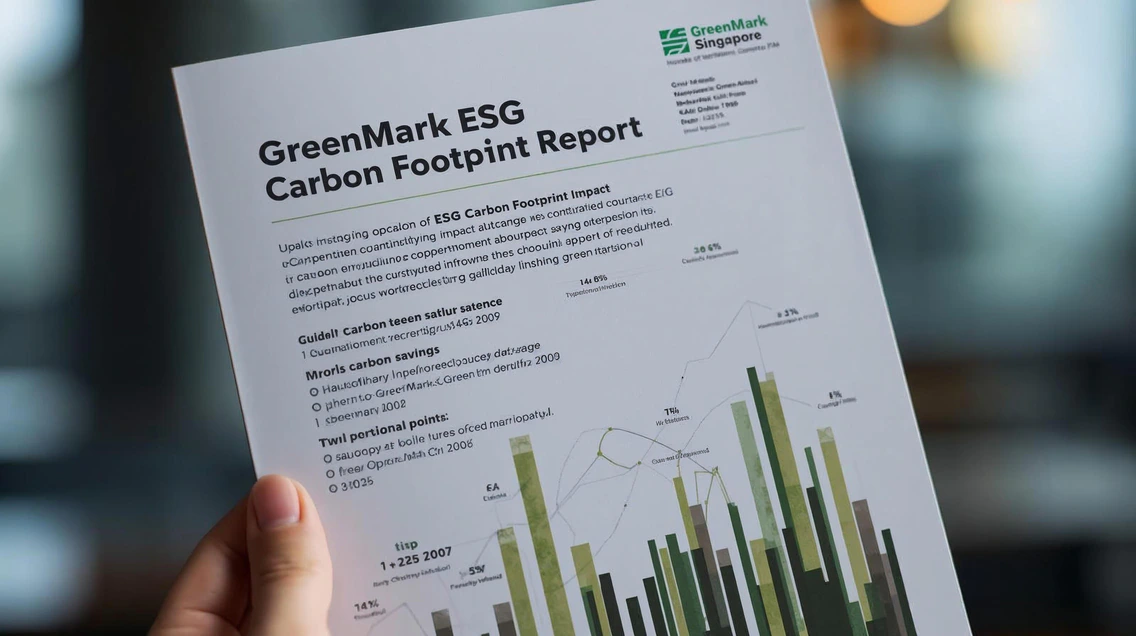
Singapore-Green Mark-ESG-Carbon-footprint-Report-

Green Mark ESG Reporting:

FAQ

Periodic Facade Inspection (PFI)

Periodic Facade Inspection (PFI) is BCA’s mandatory safety regime for inspecting building exteriors so defects that could cause falling debris are found and fixed. It is led by an appointed Competent Person and generally applies to older, taller buildings on a multi-year cycle under the framework effective since 2022.

As a rule of thumb, buildings more than 20 years old and about 13 m or taller fall into the PFI conversation, subject to BCA criteria and exemptions (such as many private landed houses and temporary buildings). Your BCA notice is the definitive trigger for action.

In the standard pathway, facade inspection recurs every seven years after the initial notice-driven cycle. Always follow the dates on your notice and your CP’s submission plan.

It is BCA’s formal instruction for the owner to carry out Periodic Facade Inspection within stated timelines—appointing a Competent Person, completing inspection and addressing defects. Treat the notice deadlines as critical path items for the MCST.

A Competent Person who meets BCA’s requirements must take professional responsibility. The CP may use Facade Inspectors under direct supervision and may use accredited DSP for high-rise buildings / BCA approved DSP for low-rise buildings for visual inspection when notification and review duties are met.

Yes—visual inspection using from accredited DSP/ BCA approved DSP when CP notification, on-site supervision and personal review of outputs are satisfied.

Smaller or simpler facades may complete inspection two phases in days, drone inspection is one day, close-range inspection is one day for standard low-rise buildings. Preparation will take weeks to months ; large multi-block estates take longer once access, weather, PE review and rectification are included. Start as soon as the notice arrives to protect the full timeline.

Costs scale with height, area, access methods and reporting/supervision depth. GreenerAir offers defined drone-scan entry packages from $600 and provides full quotations after a short technical assessment so MCSTs can budget inspection and repairs separately.

PFI targets facade and exterior-feature safety, every 7 years. PSI targets structural inspection under BCA’s periodic structural regime, every 5 years. They are related compliance topics but not interchangeable reports.

Late appointment or submission can be an offence under the Building Control framework and may attract significant penalties. Contact a CP and inspection team immediately if deadlines are at risk.

Inspection is diagnostic. Except for immediate public-safety hazards that need urgent making-safe works, repair costs are typically planned after findings are reported—using a quantified BOQ where possible.

Yes. Teams can often proceed while assisting you to obtain as-built plans via BCA’s plan purchase process so coverage planning stays accurate.

Still have more questions?

Share PFI notice, Simple site plan